Posts

Lion Population Re-established at the Samara Private Game Reserve

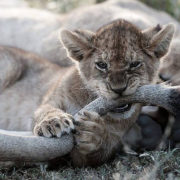
Samara Private Game Reserve is now home to the Big Five, as their founder pride of lions arrived on the reserve on the 29th of November 2018. They are thrilled to be re-establishing a lion population which had been locally extinct for 180 years.The Award-winning Samara Private Game Reserve is a luxury malaria-free safari destination with a passionate conservation mission set on 70,000 acres of breathtaking wilderness in South Africa’s Eastern Cape. Located just north of the famous Garden Route and 40 minutes from South Africa’s 4th oldest town of Graaff-Reinet, Samara offers a rejuvenating and pampering safari experience with a greater conservation purpose, delivering a safari for the soul.

Photo credit: Samara 

The lion population declined in numbers by 43% over the past 24 years. The current population is estimated to be between 20,000 and 30,000 individuals. Lions face a number of threats, all thanks to humans. Humans orchestrate indiscriminate killing in areas like the Maasai Mara, whilst the bushmeat trade and habitat loss deplete the lions’ prey base. Further pressure on the species stems from the trade in lion bones shipped to the Far East, where lion body parts are sold under the guise of being tiger bones in traditional medicine. This illegal trade has fuelled South Africa’s ‘canned lion’ industry.

Photo credit: Samara 

The ‘canned hunting’ industry refers to the act of shooting captive bred and/or tame animals in confined areas. The term canned hunting came into popular use in 1998 after the Cook Report, a British current affairs television programme, featured footage of a lioness being shot several times within a small enclosed area. The term soon became synonymous with any form of trophy hunting where hunters shot animals within confined areas, ensuring they had no or little chance of escape. Today, canned hunting is widespread in South Africa. Large numbers of wild animals are being bred in captivity specifically to be shot. This is truly terrible, and is the reason why sanctuaries like the Samara Private Game Reserve need to exist and thrive.

Photo credit: Samara 

Samara’s founder lion pride will consist of several unrelated males and females to ensure genetic diversity. The lions’ movement, feeding and breeding patterns will be monitored through satellite technology and by researchers on the ground. The Samara experience will always be about more than just ticking boxes and chasing the world’s most famous megafauna (large mammals of a particular region, habitat, or geological period), but re-introducing contributing meaningfully to conservation and responsible tourism, as well as adding an exciting new dimension to their safaris. Samara is already home to elephant, black (and white) rhino, buffalo and the occasional leopard. We are excited about their new lion pride and if you’d like to visit the game reserve, get in contact with us today.
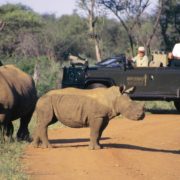
7 Tips for Enjoying Your Safari

1. Bring warm clothes with you

Always take a fleece and a scarf, among others. Surprising? Yes it is Africa, it’s hot, the sun can be relentless, but do not forget the freshness of an early morning and a game drive in an open 4×4! So, take these along to protect you against the biting morning cold. A small thermos of coffee or tea would help as well. This impression of cold will quickly dissipate with the rising sun, trust us.

2. Take your time

A safari can be the fulfillment of a dream and undoubtedly the main highlight of your trip. So it would be a pity not to dedicate enough time and give you the best opportunities to see the greatest number of animals. Therefore, we advise you to stay at the same lodge, in the same park or reserve for at least 3 nights to get the most out of your safari experience.

3. Spend at least 2 nights in a private reserve

A self-drive safari is a bit like reading a book in which you are the hero (those who have children understand!). However, a deep learning of the bush, recognising and understanding the animals of the African wildlife in the company of a professional ranger is, from our point of view, an experience not to be missed. Not to mention, a personalised service provided by an attentive staff will maximise your enjoyment, especially if you are travelling with children.

4. Live in harmony with nature

Be aware, forget lazy mornings in safari! The best time, indeed, to see the animals and especially the famous Big Five (lion, leopard, buffalo, rhino and elephant) is at sunrise and during the last hour of sunlight. Don’t worry, you will quickly adapt your rhythm with mother nature’s one. This will also grant you some good breaks during the hottest hours of the day. Use this opportunity to have a swim in the lodge’s pool, for example.

5. Observe the speed limit

Respect the animals you came here to see to give you the best chances to see as many animals as possible. Believe us, you can drive pass an elephant without noticing its presence in spite of its mass. Finally, it’s all about your and your children’s safety. Hitting a hippo can cause heavy damages. The common speed limit is 50 km/h on tarred roads and 40 km/h on all other roads and tracks.

6. Stay calm, animals don’t really care about you

A lion is approaching your car? You come across a herd of elephants? A buffalo is sitting right in the middle of the road, determined not to move and preventing you from driving on? In all circumstances, keep cool and stay calm. Animals are used to cars. Never make any sudden movements, shout or make abrupt manoeuvre with your car. They will always get out of the way 😉

7. Be in the right place at the right time

We saved you the best and maybe the most difficult for the last as it’s not really in your hands: be in the right place at the right time 😉 Remember, animals are in their natural element and actually wild, so be armed with patience and also count on your lucky stars.

By Sébastien Charrieras

Lesser-known Animals You May See on Safari

There is nothing like a safari for wildlife spotting, and southern Africa in particular is blessed with the best – from the Big Five to everything in between!

And sometimes, on safari, you chance to see a new creature, which really makes you stop and stare or ask aloud in wonder, “What was that?”

This post is dedicated to those lesser-known – but no less amazing – African animals.

Africa’s Wild Dogs

Photo Source: cuatrok77

While many of us have no doubt heard the distinct call of an African wild dog when in the bush or on safari, not everyone is lucky enough to have actually caught sight of them.

Sadly, African wild dogs are Africa’s most endangered carnivore. This means that, despite their fierce spirits and keen hunting ways, many of them are now under tight protection or are being bred in animal sanctuaries, like the Ann van Dyk Cheetah Centre.

Yet, even with these trying life circumstances, this beautifully marked dog species is particularly prevalent in South Africa’s Kruger National Park… So if you are likely to spot them anywhere in Southern Africa, it’s going to be in the Kruger.

Africa’s oh-so-adorable Lesser Bushbabies

Photo Source: pelican

The Lesser Bushbaby – found predominantly in South Africa’s Mpumalanga and Northern Cape provinces, as well as in Botswana – is an adorable, tree-dwelling primate, which, above all else, is cute as pie and most active at night.

So, if you hear something like a child crying (although slightly more unnerving, it must be said) while out on safari… It’s actually good news because it means you might be close to a bushbaby. This is because they emit somewhat eerie, childlike cries!

Capable of remarkable leaps from tree to tree (although they sometimes take to the ground too), these adorable nocturnal creatures are a nice, unexpected sighting on any safari experience… if only because of their wide-eyed fluffiness. You’ll have to be quick though because they don’t hang around for long!

Spiky African Porcupines

Photo credit: Cape Point Route

Quilled – and generally, rather grumpy – African porcupines are easily identifiable thanks to their impressive black and white quills, which they raise upright if they are exhausted or angry. What’s more, these beautifully marked quills are often left behind on the ground after them, helping to let you know where a porcupine has been.

African porcupines (which are Africa’s largest rodent… who’d have thought?) may be found in North, South and East Africa. However, they do tend to favour rocky outcrops and vegetated or hilly areas, where they can seek out shelter and perhaps above all, seclusion.

Also, they are not too frequently sighted, but porcupines are most active at night (although, if you’re lucky, you can sometimes spot them moving about during the day) …

So, when you head out on a night safari drive, be sure to keep an eye out for them just in case!

The elusive and endangered Cape Pangolin

A bonus, lesser-known animal on this list is sadly also one that is gravely endangered… In fact, the shy and elusive pangolin is one of the most heavily trafficked animals in the world – with the Asian varieties particularly facing rapid extinction.

Despite its reptilian appearance, the Pangolin is actually a mammal and when they roll themselves up into a ball, their suit of scales (which is also, sadly, why they are hunted) makes them almost impenetrable to outward dangers.

While it is extremely rare to sight one of these unusual looking fellows in Southern Africa because of their elusiveness as a species, it is still possible to see them. This is because one of the four African varieties, the Cape, or Temminck’s Ground Pangolin, calls this part of the world home.

They might not be the most adorable animal to look at (let’s admit) – the Cape Pangolin is nevertheless a worthy sighting on any safari – and you can count yourself very lucky indeed if you chance to see one out in the bush!

Photo Source: www.independent.co.uk

Leopard Tortoise

The leopard tortoise is a large tortoise found in the most varied habitats of any African tortoise including grasslands, thorn-scrub, mesic brushland, and savannas. They occupy savannahs of eastern and southern Africa, from South Sudan and Somalia to South Africa’s North West Province, the Western Cape, Eastern Cape and Northern Cape. It is one of the Small 5, along with the rhino beetle, the red-billed buffalo weaver, the elephant shrew and the antlion. They can live for up to 75 years. In extreme cold and extreme heat, they dwell in abandoned fox, jackal, or aardvark holes.

Photo Source: Michael Seeley

As they are herbivores, the diet of the Leopard Tortoise includes plants including grasses, annuals and succulents. They also gnaw bones and hyaena faeces. The high calcium content in this provides essential minerals to aid eggshell production and to keep the tortoise’s shell in good condition.  During the dry winter months, leopard tortoises store water in a bursa sac. This reserve is used to moisten baked ground to make it easier for the female to dig a nest for her eggs, as well as hydration. Do not pick up a leopard tortoise during the winter months, as they will eject their stored urine and water as a deterrent. This could dehydrate the tortoise and they could die. So if you ever come across one of these magical creatures in winter, look but don’t touch!

Bat-eared Fox

The bat-eared fox lives in the short-grass savannahs of eastern and southern Africa. Their favourite food is the harvester termite, although they also eat insects, small rodents, lizards, small snakes and wild fruit. When they are fully grown they can reach a shoulder height of 30 centimetres, with a length of 75 centimetres and weighing less than 5 kilograms.

Photo Source: Jason Matthews

Much unlike other dog species, bat-eared foxes do not mind sharing their territory. Their cubs are born after a 2-month gestation period. Bat-eared foxes also pair-bond for life. They do not make much noise in general, but they do bark, growl and whine. They communicate with each other using shrill ‘who-who who’ calls.Unfortunately, the survival of the beautiful Bat-eared Fox is threatened by a loss of their natural habitat and by the trade in their skins. Next time you see one in the wild, know that it is a great privilege.

So, next time you are on safari, don’t just focus your camera and eyes on the Big Five… keep a conscious look out for these unique creatures too, for they are just as photogenic and interesting to see!

Safari chat with a Sabi Sand Game Ranger

Below is an interview with Greg. He is 36 years old, and is a game ranger in the Sabi Sand Private Game Reserve. He tells us about safaris and tries to give us a clear insight into them.

Tell me about yourself, your career path and your current job.

Greg: Well, I was born in Johannesburg. But I was lucky because as far as I remember, I was going to safaris with my family every holiday. The bush quickly became my passion, so I decided to turn it into a job. First, I was a guide for years in the Kruger National Park where I organised walks. Then I worked in several reserves and now I’m here. It is in the bush that I feel good, and I don’t think that I will leave this place anytime soon.

How are the safaris here?

Greg: Here, we offer two safaris a day, one at dawn, very early in the morning around 5, 5:30am and the other in the afternoon; 3:00 pm in winter and 4:00pm in summer. We use open 4×4 vehicles to take the guests to see the wildlife, which is the best way to enjoy the view and take pictures. Sometimes we do safaris by night, but we do not always offer it.

Can you see animals each and every time? Or it is still a matter of luck?

Greg: Sabi Sand Game Reserve is one of the best sighting spots for game in the country. So, we are not really looking for animals. Sometimes, after a few minutes of driving, we find lions and leopards, and even sometimes all the Big Five! But Sabi Sand Game Reserve is obviously special. I have worked in other reserves and there, we kind of know where the animals are. Most of them are not really nomadic and they remain in their territory, so we get to find them. But we always need to be on the lookout for them and follow the tracks. But it’s true; it’s also a matter of luck! Sometimes we do not see all the animals we wanted to. Sometimes we’re looking for them for a long time. That’s the law of nature.

And for very large reserves, some rangers need to communicate. If someone finds a lion or something else, he usually lets the others know, and so on. In short, everything is done in order for the guests to see as many animals as they can, but they must also understand that it is not always possible, and it is not our fault. And sometimes, it takes more time than expected.

Is it not too dangerous to work in the middle of wildlife and organize safaris?

Greg: Oh, I’m glad you are asking that question! I just wanted to talk about it. Here in the Sabi Sand Game Reserve, and even in most reserves, the animals are now accustomed to humans. Well, I should say they are used to seeing 4×4’s! They know we’re not a threat, so they do not attack. But it took time, about fifteen years. Now, when our cars make a hellish noise approaching a lion, sometimes it does not even look up. But you can’t generalise, they still remain wild animals and in the wild, you never know what can happen.

Sometimes I have clients who want to get off the 4×4 to closely approach the animals, take a picture of them and come back into the car. You can even see in the Kruger Park, people leave their cars on the side of the road and start walking on foot in the bush! These are attitudes that are unconscious and dangerous. We, rangers, always have a gun if something happens. Here, it’s forbidden to walk alone and even at the Lodge you must be careful. There are rules for safaris: remain silent and wear neutral colours. So, in short, it is not really dangerous, otherwise safaris would not exist! But we need to be aware that all animals here are still wild animals, and yes, if someone walks all by himself or starts to display reckless behaviour and tries to pass for a hero by getting out of the 4×4, then, it is not safe.

What do you think the tourists don’t expect on safari?

Greg: I think that they are often surprised when they see really violent scenes. Sometimes customers do not expect this. Hunting scenes with leopards slaughtering antelopes, crocodiles ripping a leg off of a buffalo, or when wild dogs hunt, etc… Sometimes the guests think they will see a peaceful bush where all animals live in harmony, like, let’s say the Lion King movie. But no, the law of nature is cruel, and wildlife is violent! But it is also what makes it so interesting.

By Sophie Pollet