Makgadikgadi Style In The Okavango Delta

The lush channels and bountiful wildlife of the Okavango Delta have quite rightly earned it a place at the top of many a tourist’s ‘must visit’ list, and as such, this fascinating segment of Botswana boasts numerous lodges and, in many cases, sky high prices.

The notoriety and commercial appeal of the animal-heavy Okavango sits in stark contrast to the Makgadikgadi Pans National Park to its south east. It’s to this bewitchingly silent Kalahari landscape that the Bousfield family’s Uncharted Africa have welcomed generations of visitors.

Without the headline name that the Delta boasts, the Uncharted family instead drew on a deep-rooted love of the area, which was discovered by the founder’s explorer father, Jack, back in the 1960s. This passion for the extraordinarily beautiful area, the San bushmen who live in it, the mesmerising salt pans found within it, and the desert adapted species it hosts, have brought countless travellers to the area.

Each one leaving with a new-found love and appreciation for this seemingly barren part of the world. It’s for their style that the Uncharted camps have really become known though, and it’s this 1940s campaign style, time capsule concept that has made the brand’s foray into the Delta – Mapula Lodge stand out.

Uncharted Africa’s Mapula Lodge is a complete reinvention of the camp that once held the Mapula name. The eye for aesthetic detail that has made Makgadikgadi camps Jack’s and San household names is now evident in this 220,000 acre concession at the north of the Okavango Delta. The safari outpost occupies a prime position on a large tree island, with seasonal floodplains rippling around it.

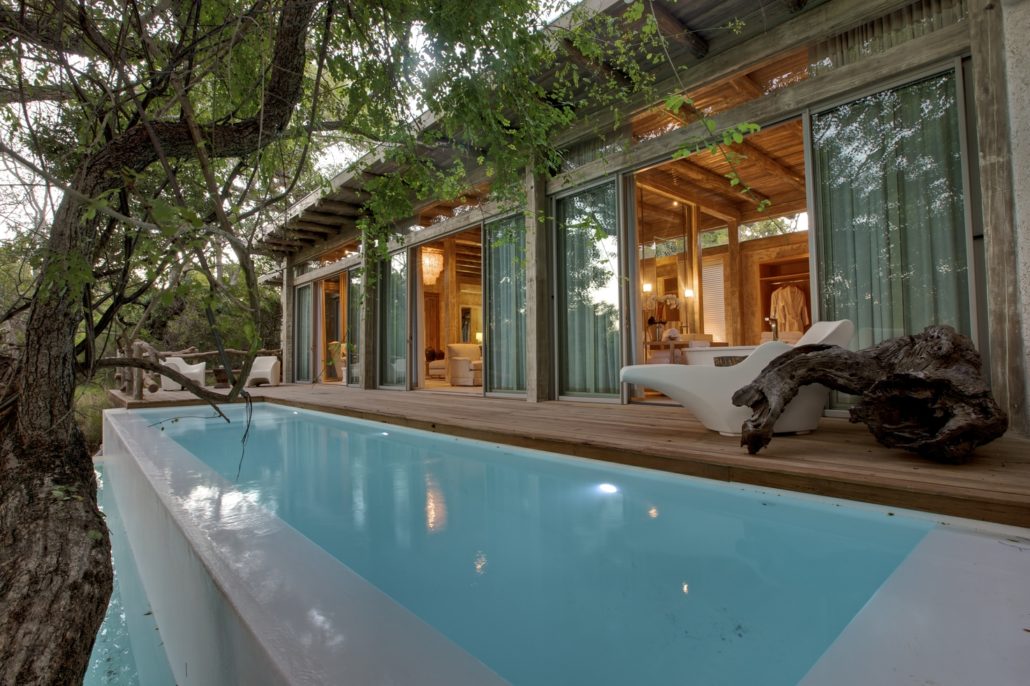
The nine tented bedrooms feature that distinctive Kalahari style, with king size metal four poster beds, Malawi chairs, brass lanterns, polished butler trays and rich Kilims on the floors. The main area meanwhile, boasts a swimming pool and relaxation spaces, replete with slouchy sofas and armchairs and jewel hued textiles.

The Uncharted brand has long been known for its guiding prowess as much as its interiors, and with legendary guide Ralph Bousfield at the helm, the guides are trained to exacting standards. Ralph of course, is used to training guides to bring out the soul of the Kalahari, so when teamed with the riches of the Okavango, the guides are in their element as they guide guests through waterways and floodplains, explaining every design choice of the great outdoors, before retiring back to the camp in all its finery. A camp which incidentally, will leave your wallet looking pretty perky as well.

by Pru Allison

Kapama Game Reserve

Nestled between the Blyde River valley and Kruger National Park, Kapama Game Reserve is one of South Africa’s largest privately owned game reserves. Renowned for its high density of big game animals, offering an authentic African safari experience and stretching across 15 000 hectares (towards the Kruger area), Kapama Private Game Reserve embodies a range of stylish accommodation across four diverse luxurious bush camps and lodges. Each one is meticulously positioned within this wildlife sanctuary.

The flagship Kapama Karula, with its 10 luxury superior villas and 2 family villas are positioned along the Klaserie River or tucked into the surrounding riverine bushveld, each in its own private paradise with a heated plunge pool and viewing deck.

Reminiscent of a traditional African safari camp, Kapama Buffalo Camp offers an authentic bush experience. The camp’s 10 exclusive tents are positioned on elevated platforms and surrounded by forest canopy.

Located in the reserves extreme south, the spectacular Kapama Southern Camp offers luxury-thatched suites. All 25 suites are discreetly hidden in the surrounding indigenous forest that’s alive with birdsong. Families are catered for at Southern Camp, with three luxury villas specially created for this purpose.

Kapama River Lodge the largest of the four camps, with flowing, opulently furnished public spaces and an expansive wooden deck leading to a rim-flow swimming pool. Beyond is an expanse of soft river sand, where atmospheric, lamp-lit dinners are enjoyed under the stars. Guests may choose between luxury, spa, spa family or Royal suites.

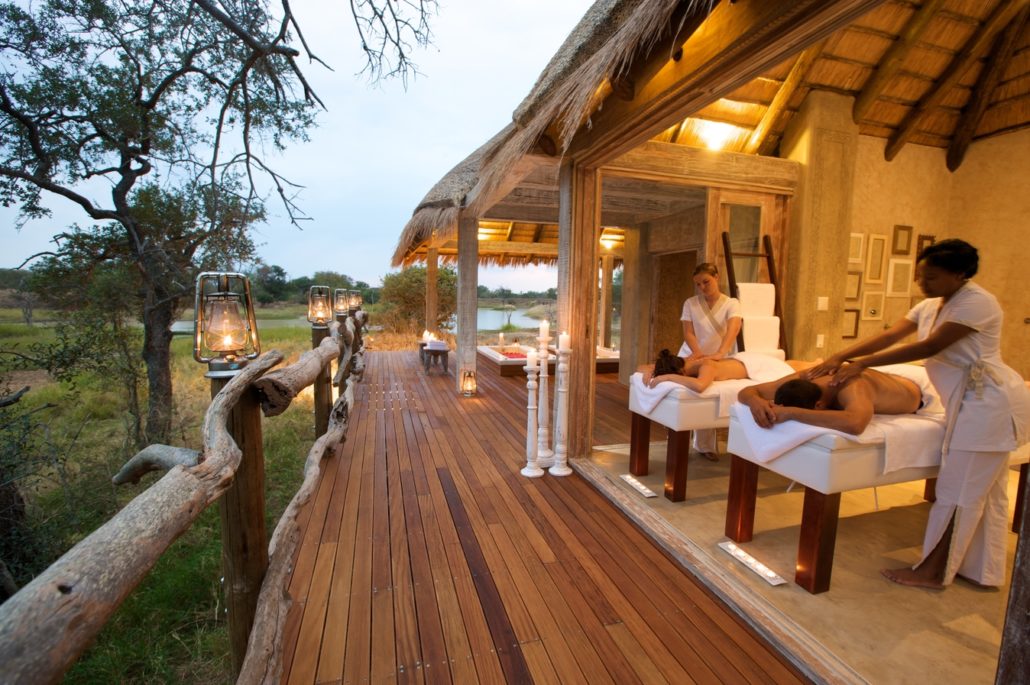
Wellness Centers are located at Karula and River Lodge, so a pampering for body and mind is close at hand. With up to five treatment rooms, indulging in one the numerous African Inspired treatments will take you to a place away from time. A shuttle is available to commute guests from Southern Camp and Buffalo Camp allowing guests from all lodges to have access to these world class award-winning spas.

Kapama is known for its diverse wildlife experiences and is home to the Big 5. With two daily game drives, fascinating encounters with prolific wildlife, including over 350 bird species and over 40 species of mammals is ensured.

Kapama offers free transfers for guests flying into Hoedspruit airport on commercial flights. The short transfer from the airport to your designated lodge is in an open-air safari vehicle. This means within a matter of minutes your safari adventure can begin.

For the discerning traveller wanting a more luxury, private and customized travel option, Kapama’s private airstrip and PC12 private plane gives guests the opportunity to fly directly into Kapama.

By Nicole Walker

7 Top Jazz Venues in Cape Town

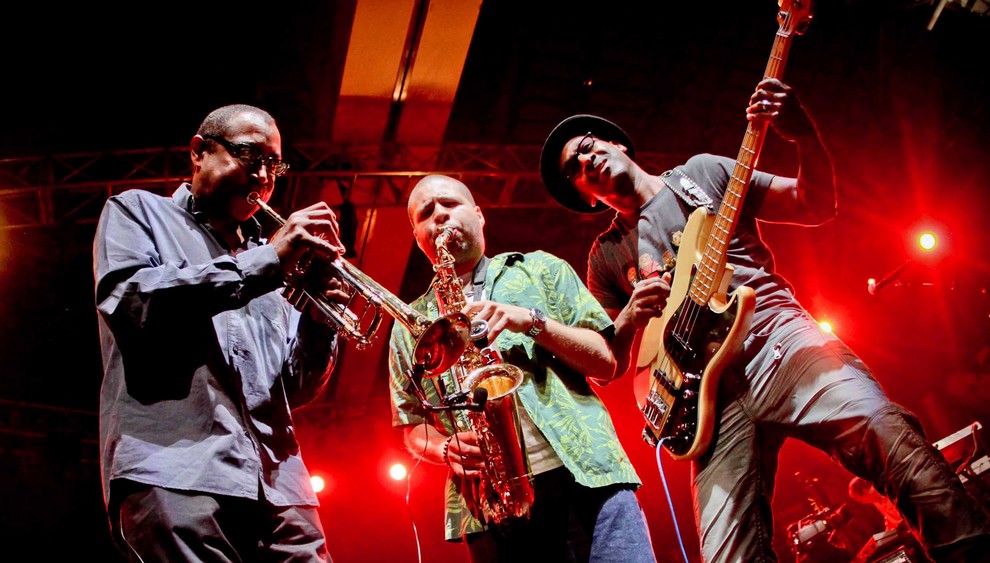
We are pleased to share our past experiences enjoying jazz music in Cape Town. We’ve had the chance to clean our ears in unusual places, each having their own way of giving us jazz fever. Here are seven places that we recommend in order to entertain your senses all year round in Cape Town…

Sunday Jazz Brunch at the Winchester Mansions

For a Sunday brunch with a difference, head out to the seaside hotel: Winchester Mansions. Enjoy the live jazz band while you browse the complimentary Sunday newspaper and sip on a glass of bubbly. Choose from a selection of dishes from the buffet at will. Cost is R225 per person, and the music starts at 11am and ends at 2pm.

Details: 221 Beach Road | Sea Point | Cape Town

Hanover Street Jazz Club

With its double-storey, Hanover Street Jazz Club is a classy jazz venue housed in Cape Town’s Grand West Casino. It makes you think of New Orleans circa 1920—the golden days of jazz. The well-stocked bar will keep you happy while tapping your feet to the beats from the Voodoo-capital. Doors open at 9pm.

Details: Grand West Casino | Goodwood |

Thuthuka Jazz Café

The owner Laura Ndukwana offers visitors a night overflowing with local flavour at this popular Gugulethu-based café. You will enjoy world-class jazz mixed with traditional musical elements. Popular amongst Capetonians and tourists, we can expect a truly South African experience. A potjie of culture combining musical expression and culinary splendours.

Details: Gugulethu |

Studio 7

If you’re looking for private concerts, you will love this new Sea Point establishment. Face brick walls, wooden floors and soft sofas provide the ultimate relaxing environment for some serious musical reflection. The acoustic stage has showcased some talented local musicians including Zolani Mahola, Vusi Mahlasela, Arno Carstens and Albert Frost. You can see some of these talented musicians on the first and last Sunday of the month.

Details: 213 High Level Rd | Sea Point | Cape Town |

West End Jazz Club

Regarded as a prime venue for live performances, you can expect to rub shoulders with serious jazz fundis. Dark velvet drapery and opulent contemporary furnishings set the scene for top local and international artists to do what they do the best. Open every Friday and Saturday from 5pm till late. No under 21s allowed.

Details: Cine 400 Building | College Road | Rylands |

Kaleidoscope Café

Every Friday you can bob your head and tap your feet to the spellbinding jazz beats at this Claremont café. For a mere R100 per person, you can attend to the show as well as enjoy a delicious meal of lamb curry or chicken soup. If you just prefer to watch the show, you only have to pay R60. Show starts at 7:30 pm sharp.

Details: 85 Main Road | Claremont | Cape Town |

Tuesday Jazz at Alexander Upstairs

Alexander Bar features live jazz every Tuesday night at 8pm. Hosting both emerging artists and long-time maestros, the 40-seater theatre space is ideal for those looking for high quality, up-close-and-personal improvisation early in the week. There’s no other city centre jazz venues that feature live music on Tuesdays, so this is a real treat! The sessions are curated by Benguela bassist Brydon Bolton.

Details: 76 Strand Street | City Centre | Cape Town |

By Sébastien Charrieras

7 Tips for Enjoying Your Safari

1. Bring warm clothes with you

Always take a fleece and a scarf, among others. Surprising? Yes it is Africa, it’s hot, the sun can be relentless, but do not forget the freshness of an early morning and a game drive in an open 4×4! So, take these along to protect you against the biting morning cold. A small thermos of coffee or tea would help as well. This impression of cold will quickly dissipate with the rising sun, trust us.

2. Take your time

A safari can be the fulfillment of a dream and undoubtedly the main highlight of your trip. So it would be a pity not to dedicate enough time and give you the best opportunities to see the greatest number of animals. Therefore, we advise you to stay at the same lodge, in the same park or reserve for at least 3 nights to get the most out of your safari experience.

3. Spend at least 2 nights in a private reserve

A self-drive safari is a bit like reading a book in which you are the hero (those who have children understand!). However, a deep learning of the bush, recognising and understanding the animals of the African wildlife in the company of a professional ranger is, from our point of view, an experience not to be missed. Not to mention, a personalised service provided by an attentive staff will maximise your enjoyment, especially if you are travelling with children.

4. Live in harmony with nature

Be aware, forget lazy mornings in safari! The best time, indeed, to see the animals and especially the famous Big Five (lion, leopard, buffalo, rhino and elephant) is at sunrise and during the last hour of sunlight. Don’t worry, you will quickly adapt your rhythm with mother nature’s one. This will also grant you some good breaks during the hottest hours of the day. Use this opportunity to have a swim in the lodge’s pool, for example.

5. Observe the speed limit

Respect the animals you came here to see to give you the best chances to see as many animals as possible. Believe us, you can drive pass an elephant without noticing its presence in spite of its mass. Finally, it’s all about your and your children’s safety. Hitting a hippo can cause heavy damages. The common speed limit is 50 km/h on tarred roads and 40 km/h on all other roads and tracks.

6. Stay calm, animals don’t really care about you

A lion is approaching your car? You come across a herd of elephants? A buffalo is sitting right in the middle of the road, determined not to move and preventing you from driving on? In all circumstances, keep cool and stay calm. Animals are used to cars. Never make any sudden movements, shout or make abrupt manoeuvre with your car. They will always get out of the way 😉

7. Be in the right place at the right time

We saved you the best and maybe the most difficult for the last as it’s not really in your hands: be in the right place at the right time 😉 Remember, animals are in their natural element and actually wild, so be armed with patience and also count on your lucky stars.

By Sébastien Charrieras

Mysterious and Enigmatic Namibia

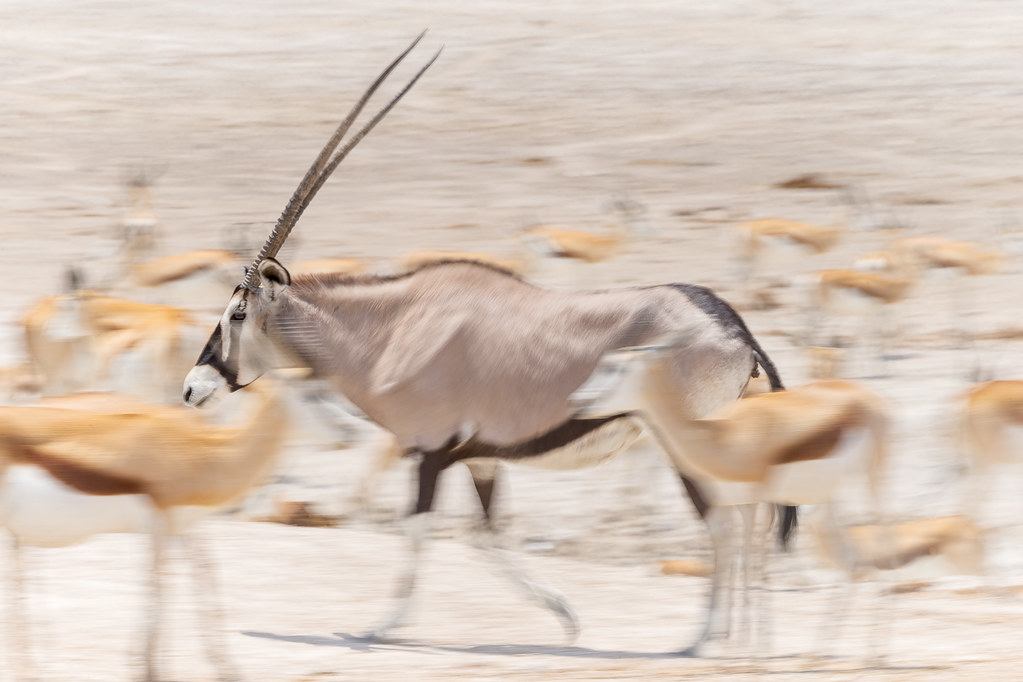
Mysterious and enigmatic, Namibia possesses a unique beauty. From the harshly inhospitable Skeleton Coast with its shipwrecks to the vast salt pans of Etosha National Park, Namibia is one of the most amazing countries in Africa. There are massive, shifting sand dunes, said to be the highest in the world. And nothing beats the Namibia Desert sun at Sossusvlei. This area is a must for photographers. Not only are the dramatic shapes of the sands wonderfully photogenic but here you can get a picture of the magnificent desert oryx.

Photo Credit: Alain Martineau

Botanists and zoologists are often keen to observe the adaptation of both animal and plant species to the apparently hostile environment. Namibia offers a rare chance to see fascinating animals such as the oryx, known as ”master of the desert”, and the endangered desert elephant, both of which are very specialised. The Huab Valley also has rare specimens of Welwitschia mirabilis, a strange tree that has been overcome by the desert climate and is a supreme example of evolutionary adaptation.

In Etosha National Park you will see more wildlife. All of the ‘big five’ (lion, leopard, buffalo, rhino and elephant) may be found here. Springbok, wildebeest, eland and zebra range the park and congregate at the water holes in far larger numbers during the dry months of June to December. There are good numbers of lion and leopard and black rhino. Ongava Game Reserve, next to the Park, even has white rhino.

Photo Credit: dconvertini

Swakopmund is a quiet seaside town with considerable charm. An extremely comfortable base from which to explore the desert and the coast, this is a wonderful place to have a ride on a quad bike, to a board at speeds of up to eighty kilometres per hour or Cross seal colony. There is one of the four desert golf courses in the world here as well.

The desert is a wonderful place for those seeking solitude and the time in which to reflect, yet Namibia also offers so much more. Fascinating animals, a strange and interesting plant world, the heart-pounding thrill of adrenaline and some of the most strangely haunting landscapes in the world. Namibia has a unique beauty. From the inhospitable Skeleton Coast with shipwrecks to the vast salt marshes of Etosha National Park, Namibia is one of the most amazing countries in Africa.

The massive moving sand dunes, said to be the highest in the world, form an ever-changing play of light and shade under the hot sun of the Namib Desert at Sossusvlei. This area is a must for photographers. Not only are the spectacular forms of red sands marvellously photogenic, but you will also be able to obtain magnificent images of the desert oryx.

Photo Credit: Renaud CHODKOWSKI 

The desert is a wonderful place for those seeking solitude and time to think. But, Namibia is not just desert. It offers so much more. Fascinating animals, a strange and interesting plant world, thrilling sports, thrills, adrenaline and beating heart as well as some of the most curious and captivating landscapes in the world.

By Sébastien Charrieras

Meet & Greet with Michelle

Meet Michelle Adams, our caring, rockstar of an Office & HR manager ( a.k.a knows the answers to all your XO questions). Find out what her idea of a romantic city is and whether she prefers Brad Pitt to Idris Alba…

Look out for our next video when you’ll get to meet another member of our team!

Conservation Projects we love in Southern Africa

Africa is full of biodiversity and gorgeous wildlife that is in dire need of protection. Thankfully, there are many organisations dedicated to the research and implementation of conservation projects, allowing the populations of endangered animals to increase steadily. Here are a few great projects we’ve pinpointed from around Southern Africa…

Wildlife ACT, South Africa

Their mission is to help save the country’s endangered wildlife and habitats from extinction through various projects. Johan Maree, Chris Kelly and Dr Simon Morgan are three individuals determined to help conserve wildlife. They’ve been ensuring sustainable, long-term monitoring and conservation projects since 2008.

Photo Source: wildlifeact.com 

Wildlife ACT assists game reserves who do not have the funds or capacity to run their own wildlife conservation projects by providing tracking and monitoring services. They will either initiate conservation projects at these game reserves, or they will take over existing monitoring projects that the game reserves can no longer afford or manage.

And just when you think they can’t get any better, you’ll be impressed even further by the fact that they perform their services for these game reserves free of charge! In fact, Wildlife ACT relies heavily on volunteer work in order to support the work they do. Wildlife ACT is 100% reliant on their volunteers, who help in the daily tracking and monitoring of endangered wildlife species such as African Wild Dogs, Cheetah and Black Rhino, as well as priority species such as Elephant, Lion, Leopard and many more.

Botswana Predator Conservation Trust

The Botswana Predator Conservation Trust (BPCT) has been working to study and preserve wildlife in Africa for nearly thirty years. It started off as the Botswana Wild Dog Research Project and is now BPCT, one of the longest running conservation projects on the continent. The organisation researches and protects all the large carnivore species in Botswana. Their protection covers wild dogs, lions, leopards, cheetahs and spotted hyaenas, as well as their habitats.

Photo Source: www.bpctrust.org/gallery

As a core project over the past nearly thirty years, The Botswana Predator Conservation Trust has maintained a field research site on the edge of the Moremi Game Reserve. In that time, they have developed a unique data set documenting the life histories of cheetahs, leopards, spotted hyaenas, lions and wild dog packs. They have the only laboratory in Africa dedicated to chemical signalling. It’s called the Paul G Allen Family Foundation Laboratory for Wildlife Chemistry (PGAFFLWC), located in Mau. This is where all of the analytical work is carried out.

Underwater Africa Volunteer Program, Mozambique

The Underwater Africa Volunteer Program is a marine volunteer expedition programme based in picturesque Tofo, Mozambique. Their mission statement is, “we aim to harness the power of our volunteer researchers to elicit real and meaningful changes to Mozambique’s incredible ecosystems through pioneering research and conservation.”

Those who volunteer for this cause participate in a range of field work including taking identification photo’s, observing environmental conditions, changing out and deploying reef camera traps, checking acoustic listening stations, studying plankton, monitoring protected areas, and measuring ocean giants.

Photo Source: underwaterafrica.org 

From entire coral reef systems, and from the largest marine animals to the smallest, The Underwater Africa Volunteer Program’s research spans all of these topics. They believe that in order to solve the huge problems that these animals face they must gain a full understanding of each species. The research then informs their conservation practices, which then empowers them to protect these animals.

The N/a’an ku sê Foundation, Nambia

With the aim of conserving the land, cultures and wildlife of Namibia, Dr Rudie and Marlice van Vuuren along with other founding members, founded the N/a’an ku sê Foundation in 2006. This is a conservation organisation that sustains its projects through non-governmental funding and responsible conservation tourism.

Photo Source: naankuse.com

They run several projects to improve the health and well-being of the ancient yet marginalised San Bushmen of Namibia, provide a second chance to countless orphaned, injured and/or conflict animals, work to prevent land degradation, and stand at the forefront of the human-wildlife conflict mitigation by undertaking critical conservation and research projects to ensure a thriving future for Namibia’s majestic wildlife.

Their vision is seeing humans and wildlife living and thriving together in Africa. Their mission is to conserve the land, cultures and wildlife of Namibia and rescue species threatened by an ever-shrinking habitat.

Zambian Carnivore Programme

The Zambian Carnivore Programme (ZCP) is a non-profit Zambian-registered trust. They work closely with the Department of National Parks and Wildlife (DNPW) and are dedicated to conserving large carnivores and the ecosystems they reside in. They do this through three approaches: Conservation Science, Conservation Action, and Conservation Capacity.

The success of this work lies on the shoulders of their diverse collaborations with local, national and international partners, agencies, organizations and institutions that collectively provide the expertise, resources and energy to address the myriad conservation challenges facing Zambia and the region.

Photo Source: www.zambiacarnivores.org 

It is common for local communities not to be involved in research and conservation efforts. ZCP helps ensure sustainability by training, educating, sponsoring, and employing young Zambian wildlife professionals from the secondary school level through to international graduate programs.

This way, Zambia’s most equipped and intelligent have the chance to contribute their talents to wildlife conservation both now and in the future.

Bumi Hills Foundation, Zimbabwe

As one of Zimbabwe’s conservation projects, The Bumi Hills Foundation aims to reduce poaching and restore the ecology of the Lake Kariba and Charara South Safari area by having the game to return to the area. Volunteers camp out in remote areas of the park to monitor areas of high poaching and remove snares and traps.

Volunteers check for evidence of poaching, monitor known herds of big game, look for signs of animal activity, and map the locations of snares and poaching activity. The organisation has six main objectives: anti-poaching, human-wildlife conflict, wildlife research, healthcare, education and economic empowerment.

Photo Source: www.bumihillsfoundation.org

For the anti-poaching objective, they aim to win the war on poaching. Where the wildlife-human conflict is concerned, their approach is to provide long-term relief and uplift both humans and wildlife. The Bumi Hills Foundation believes that knowledge is power, thus by carrying out extensive research on wild flora and fauna, they will save vulnerable species from extinction. In terms of healthcare, they believe that it is crucial that adequate healthcare is provided to any community in order for it to thrive.

Through education programmes that are focused on curriculum enhancement, teacher support, infrastructural development, and logistical assistance, they will be able to create more successful and environmentally conscious future generations. Lastly, Bumi Hills aims for economic empowerment.  They will provide the necessary tools, skills and financial support in order to enable independence and sustainability among the local community.


Conservation organisations from Botswana, Mozambique, Namibia, South Africa, Zambia and Zimbabwe are all working hard to ensure a better and brighter future for their wildlife.  All of these organisations are positively impacting their communities. If you wish to get involved, visit their websites to find out more.

Strange, Beautiful Namibia

It might be a mirage or a ghost ship. Laid down on the sand, where the desert meets the ocean, is a cargo boat that ended up on Namibia’s shore a few years ago. It has started its long disintegration by oxidation, like hundreds of others along the Atlantic coast. Half immersed, or eaten by sand, run-aground shipwrecks lie strewn along the Namibian coastline.

This region is charmingly called ‘Skeleton Coast’ (it is, in fact, a National Park since 1971), although it wasn’t originally named for its shipwrecks, but for the whale and seal bones that once littered the shore as a result of the whaling industry. The Bushmen called it ‘The land God made in anger’ while Portuguese sailors one referred to it as ‘The Gates of Hell’. Unless you are cut out for adventure and decide to join an expedition, the northern part of Skeleton Coast is very difficult to access and can only be visited by plane.

Further South, in the Damaraland, you can go through the desert with a four-wheel-drive vehicle to discover the fascinating wildlife. In this country of extremes, strangeness is also in animal life. At first there are safaris. They take on a new dimension in this region because all the animals we are used to seeing in the bush live here in the desert: elephants, black rhino, lions, cheetah, giraffe, brown hyena, etc. Besides these mammals, there are also all these curious beings that need to be approached gently. Small, camouflaged, furtive; yet they are incredibly captivating!

For example, take a look at the Palmato Gecko, the endemic gecko of the Namib Desert: with its cute face, pastel colours and habit to lick its eyes with its long tongue in order to keep them moist (they have no eyelids), they are adorable. Or the Namaqua Chameleon, who certainly hasn’t got the nicest physique, but possesses very interesting characteristics: they are lightning fast with extraordinary mobile eyes, skin that changes its colour according to mood or temperature, and a tongue that reaches a length of up 30 centimetres! Anyway, this is just an overview of the peculiar fauna living in this land. But to find and approach them, you’ll need a guide.

Photo Source: Manfred W

Definitely the land of strangeness, Damaraland also houses a very rare plant: the Welwitschia Mirabilis, with remarkable longevity and constitution. It lives for up to 600 years on average, but 2,000-year-old specimens have been found. Concerning its appearance and its impressive size (the biggest Welwitschia is 1.40 metres in height and 4 metres diameter), it hides a disconcerting simplicity: it only possesses two leaves which grow constantly, making it look like a giant squid.

Finally, when we talk about Damaraland, we can’t forget to mention the Spitzkoppe, the huge rock standing in the middle of the desert which offers an astonishing landscape. The 700 million-year-old group of bald granite peaks with a highest outcrop of 1,784 metres, extends as far as the eye can see.

Photo Source: Maurits Vermeulen

The list of uncommon and weird things you can find in Namibia doesn’t stop there. This is just an introduction for curious people. From there, it is time for you to discover this country and its hidden treasures by yourselves. We’ll be delighted to create a peculiar adventure for you.

Photo Source: ka.hi

By Muriel Romero

Meet and Greet Samuel

Welcome to our new XO series ‘Meet & Greet’ where you get to know the staff member you’ve chatted to or the one whose been at end five month long email conversation. We kick off the series with our General Manager, Samuel Regnier.

Lesser-known Animals You May See on Safari

There is nothing like a safari for wildlife spotting, and southern Africa in particular is blessed with the best – from the Big Five to everything in between!

And sometimes, on safari, you chance to see a new creature, which really makes you stop and stare or ask aloud in wonder, “What was that?”

This post is dedicated to those lesser-known – but no less amazing – African animals.

Africa’s Wild Dogs

Photo Source: cuatrok77

While many of us have no doubt heard the distinct call of an African wild dog when in the bush or on safari, not everyone is lucky enough to have actually caught sight of them.

Sadly, African wild dogs are Africa’s most endangered carnivore. This means that, despite their fierce spirits and keen hunting ways, many of them are now under tight protection or are being bred in animal sanctuaries, like the Ann van Dyk Cheetah Centre.

Yet, even with these trying life circumstances, this beautifully marked dog species is particularly prevalent in South Africa’s Kruger National Park… So if you are likely to spot them anywhere in Southern Africa, it’s going to be in the Kruger.

Africa’s oh-so-adorable Lesser Bushbabies

Photo Source: pelican

The Lesser Bushbaby – found predominantly in South Africa’s Mpumalanga and Northern Cape provinces, as well as in Botswana – is an adorable, tree-dwelling primate, which, above all else, is cute as pie and most active at night.

So, if you hear something like a child crying (although slightly more unnerving, it must be said) while out on safari… It’s actually good news because it means you might be close to a bushbaby. This is because they emit somewhat eerie, childlike cries!

Capable of remarkable leaps from tree to tree (although they sometimes take to the ground too), these adorable nocturnal creatures are a nice, unexpected sighting on any safari experience… if only because of their wide-eyed fluffiness. You’ll have to be quick though because they don’t hang around for long!

Spiky African Porcupines

Photo credit: Cape Point Route

Quilled – and generally, rather grumpy – African porcupines are easily identifiable thanks to their impressive black and white quills, which they raise upright if they are exhausted or angry. What’s more, these beautifully marked quills are often left behind on the ground after them, helping to let you know where a porcupine has been.

African porcupines (which are Africa’s largest rodent… who’d have thought?) may be found in North, South and East Africa. However, they do tend to favour rocky outcrops and vegetated or hilly areas, where they can seek out shelter and perhaps above all, seclusion.

Also, they are not too frequently sighted, but porcupines are most active at night (although, if you’re lucky, you can sometimes spot them moving about during the day) …

So, when you head out on a night safari drive, be sure to keep an eye out for them just in case!

The elusive and endangered Cape Pangolin

A bonus, lesser-known animal on this list is sadly also one that is gravely endangered… In fact, the shy and elusive pangolin is one of the most heavily trafficked animals in the world – with the Asian varieties particularly facing rapid extinction.

Despite its reptilian appearance, the Pangolin is actually a mammal and when they roll themselves up into a ball, their suit of scales (which is also, sadly, why they are hunted) makes them almost impenetrable to outward dangers.

While it is extremely rare to sight one of these unusual looking fellows in Southern Africa because of their elusiveness as a species, it is still possible to see them. This is because one of the four African varieties, the Cape, or Temminck’s Ground Pangolin, calls this part of the world home.

They might not be the most adorable animal to look at (let’s admit) – the Cape Pangolin is nevertheless a worthy sighting on any safari – and you can count yourself very lucky indeed if you chance to see one out in the bush!

Photo Source: www.independent.co.uk

Leopard Tortoise

The leopard tortoise is a large tortoise found in the most varied habitats of any African tortoise including grasslands, thorn-scrub, mesic brushland, and savannas. They occupy savannahs of eastern and southern Africa, from South Sudan and Somalia to South Africa’s North West Province, the Western Cape, Eastern Cape and Northern Cape. It is one of the Small 5, along with the rhino beetle, the red-billed buffalo weaver, the elephant shrew and the antlion. They can live for up to 75 years. In extreme cold and extreme heat, they dwell in abandoned fox, jackal, or aardvark holes.

Photo Source: Michael Seeley

As they are herbivores, the diet of the Leopard Tortoise includes plants including grasses, annuals and succulents. They also gnaw bones and hyaena faeces. The high calcium content in this provides essential minerals to aid eggshell production and to keep the tortoise’s shell in good condition.  During the dry winter months, leopard tortoises store water in a bursa sac. This reserve is used to moisten baked ground to make it easier for the female to dig a nest for her eggs, as well as hydration. Do not pick up a leopard tortoise during the winter months, as they will eject their stored urine and water as a deterrent. This could dehydrate the tortoise and they could die. So if you ever come across one of these magical creatures in winter, look but don’t touch!

Bat-eared Fox

The bat-eared fox lives in the short-grass savannahs of eastern and southern Africa. Their favourite food is the harvester termite, although they also eat insects, small rodents, lizards, small snakes and wild fruit. When they are fully grown they can reach a shoulder height of 30 centimetres, with a length of 75 centimetres and weighing less than 5 kilograms.

Photo Source: Jason Matthews

Much unlike other dog species, bat-eared foxes do not mind sharing their territory. Their cubs are born after a 2-month gestation period. Bat-eared foxes also pair-bond for life. They do not make much noise in general, but they do bark, growl and whine. They communicate with each other using shrill ‘who-who who’ calls.Unfortunately, the survival of the beautiful Bat-eared Fox is threatened by a loss of their natural habitat and by the trade in their skins. Next time you see one in the wild, know that it is a great privilege.

So, next time you are on safari, don’t just focus your camera and eyes on the Big Five… keep a conscious look out for these unique creatures too, for they are just as photogenic and interesting to see!